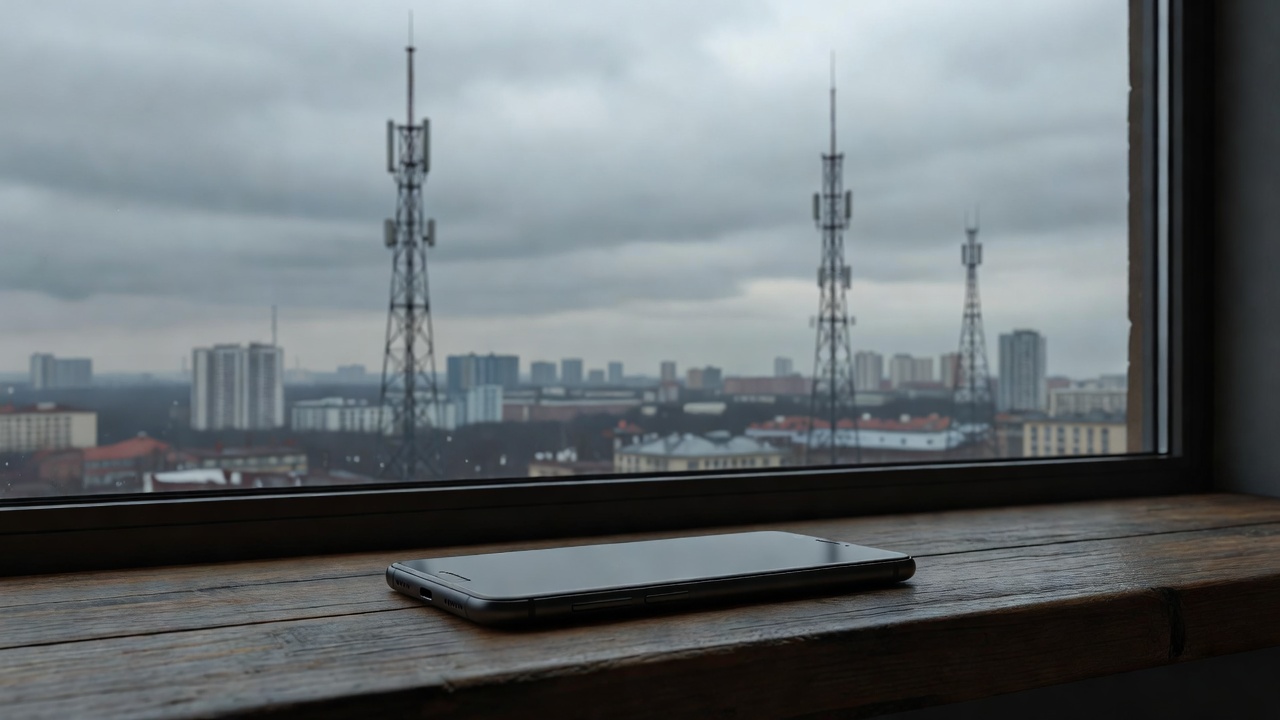
This new Android security setting spots bad networks and fake cell towers - enable it ASAP
Let's be honest: most of us treat network security like we treat flossing. We know we should care. We know the risks are real. But when the coffee shop Wi-Fi beckons with its siren song of "Free_Customer_WiFi_5G" and we just need to fire off that Slack message or download a podcast before the subway goes underground, principle evaporates. Convenience wins. It always wins.
Google knows this. That's why the most consequential security feature in Android 17 isn't a new encryption protocol or a biometric upgrade — it's a nag. A persistent, unignorable, system-level notification that screams hey, you're on an unencrypted network or this cell tower looks suspicious. It's called "Network notifications," and if you're running Android 17, you should enable it today. Not tomorrow. Not after you read three more think pieces. Today.
The threat model hasn't changed. The stakes have.
Fake cell towers — IMSI catchers, Stingrays, whatever branded acronym law enforcement and spooks prefer this decade — have been around since the GSM era. The vulnerability is architectural: your phone trusts the strongest signal broadcasting a valid network ID. It doesn't cryptographically verify the tower's identity. It just connects. That design decision made sense in 1991 when base stations cost millions and only nation-states ran them. It makes zero sense in 2025 when a software-defined radio kit costs $300 and fits in a backpack.
We've known this for years. The Snowden leaks confirmed state-level deployment. DefCon talks have demonstrated commercial kits since 2010. Yet Android and iOS both treated cellular authentication as a solved problem. It wasn't. It isn't. The only thing that changed is the barrier to entry: any motivated attacker can now spoof a tower, force your phone to downgrade to 2G (where encryption is optional or nonexistent), and hoover up your IMSI, call metadata, and unencrypted traffic.
Wi-Fi is worse. The "password = security" fallacy persists because it's convenient for cafes, hotels, and airlines. WPA2-Personal with a shared PSK means everyone on that network can sniff everyone else's traffic if they bother to capture the four-way handshake. WPA3 fixes this with SAE, but adoption is glacial. Most public networks still run WPA2 or — god help you — open with a captive portal.
What Android 17 actually does
The new "Network notifications" setting does two things that should have been baseline a decade ago:
First, it alerts you when you connect to an unencrypted Wi-Fi network. Not "open network" — unencrypted. That distinction matters. A network with a password but no encryption (yes, those exist) triggers it. A network with WPA3 doesn't. You finally get visibility into the actual security posture, not the marketing posture.
Second — and this is the headline feature — it warns when a network "records your unique device or SIM ID." In plain English: it detects IMSI harvesting. When a cell tower (real or fake) requests your International Mobile Subscriber Identity during the initial attachment procedure, Android 17 can now flag that this happened and let you know. It's not a full IMSI-catcher detector — it can't cryptographically prove the tower is fake — but it surfaces the behavior that matters: something just grabbed your permanent identifier.
That's huge. Your IMSI is the master key to your mobile identity. It links every call, text, and data session to your billing account, your physical location history, and your legal person. Police Stingrays grab it. Criminal IMSI catchers grab it. Advertisers and data brokers would kill for it. Until now, your phone handed it over silently, every single time.
Why this matters more than you think
Security folk love to say "assume breach." Assume the network is hostile. Assume the tower is fake. But that's a posture for security engineers, not for a journalist filing from a hotel lobby or a developer pushing a hotfix from a conference center. We need to know when the assumption becomes reality.
Network notifications closes the feedback loop. It transforms an invisible, passive compromise into an active decision point. You're on a sketchy network? The notification tells you. You can disable Wi-Fi, toggle airplane mode, fire up a VPN, or — crucially — decide the risk is acceptable for this specific task. Informed consent. What a concept.
And it shifts the ecosystem. When millions of Android users start seeing "Unencrypted network detected" at Starbucks, Starbucks feels pressure to deploy WPA3 Enterprise or at least WPA3-Personal. When travelers see "SIM ID recorded" at a border crossing or protest, the conversation about IMSI catcher deployment moves from DefCon slides to front pages. Visibility creates accountability.
The caveats you'll hear (and why they're wrong)
"It'll cause alert fatigue." Maybe. But Android's notification channels let you tune severity. Set it to silent with a dot indicator if you must. But don't disable it.
"It doesn't prevent the attack." Correct. It's detection, not prevention. But detection is the prerequisite for response. You can't mitigate what you don't know happened.
"iOS should do this too." Absolutely. Apple's silence on IMSI catcher detection is deafening. Their "Enhanced Visual Voicemail" and "Wi-Fi Calling" features implicitly trust the network. They should be ashamed. But Android shipped it first. Use it.
Enable it now. Here's how.
Settings → Security & Privacy → More Security Settings → Network Notifications. Toggle both "Unencrypted network" and "Device/SIM ID recorded." Done. Takes fifteen seconds.
Then go about your day. The next time you're in an airport, a hotel, a protest, or just a sketchy cafe, your phone will tell you the truth about the network you're standing on. That's not paranoia. That's the bare minimum for operating in a hostile radio environment.
We've spent fifteen years pretending public networks were safe because they had passwords. They weren't. We've spent thirty years pretending cell towers were authentic because they broadcasted the right MCC/MNC. They aren't. Android 17 finally stops lying to us about it.
Enable the setting. Pay attention to the notifications. And stop connecting to things you don't trust just because they're convenient. The radio spectrum is hostile. Your phone just agreed to tell you so.