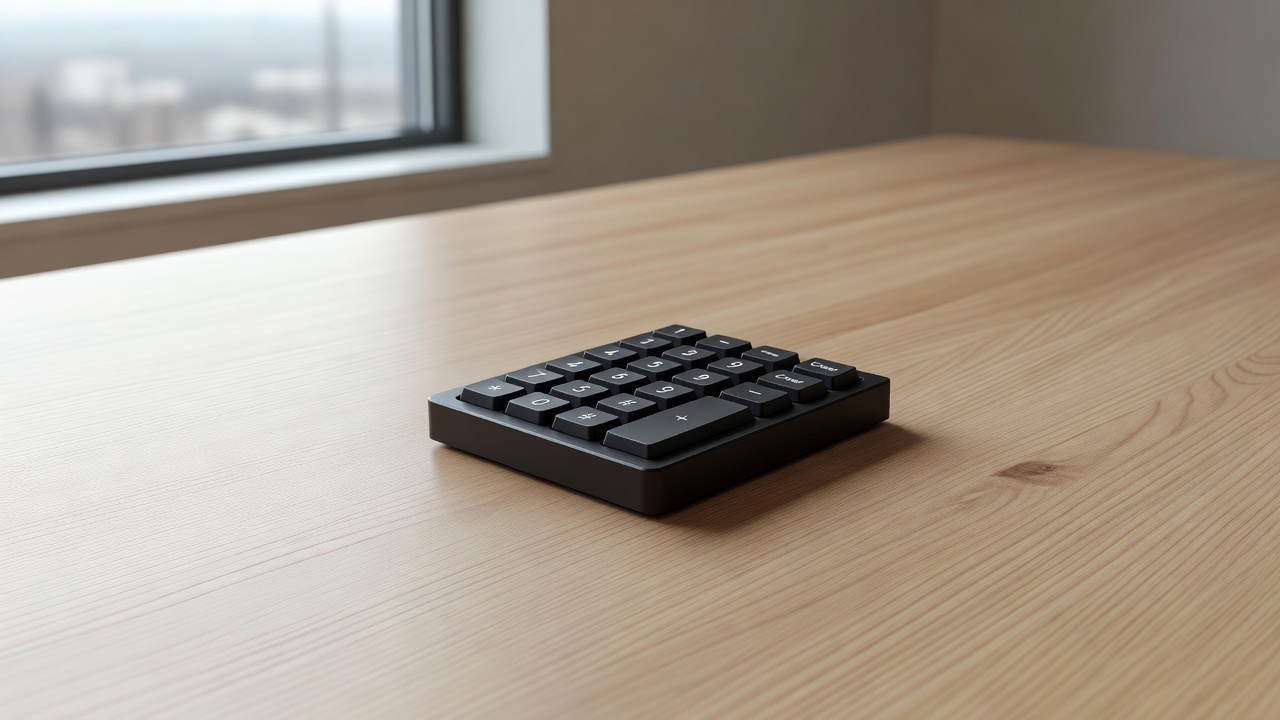
The Dune keypad device can be your meeting controller and more
Digital Frontier EditorialJuly 3, 20265 min read
Key Takeaways
Project Mirage's $119 Dune keypad puts three context-aware hardware buttons on your MacBook for universal meeting controls and app-specific shortcuts
The device draws power from USB-C, requires no battery, and ships custom-fit to your specific Mac model for a flush mount
Keys are too easy to trigger accidentally — brushing the device can unmute you or kill your camera mid-meeting
Claude Desktop integration lets non-coders create complex automations in plain English, though debugging still requires iteration
The stick of gum on your desk just became the most useful piece of hardware in your meeting stack.
Project Mirage's Dune costs $119. It plugs into a USB-C port. It has three aluminum keys. That's the entire spec sheet, and it's enough to make every software mute button feel obsolete.
The problem it solves is stupidly universal. Zoom uses Command-Shift-A. Teams uses Command-Shift-M. Google Meet uses Command-D. Webex uses something else entirely. Your fingers memorize nothing because every platform insists on its own taxonomy. Dune ignores all of them. It sits at the hardware layer. When a meeting app gains focus, the left key toggles microphone, the center toggles camera, the right brings the window forward. Switch to Excel and those same keys become copy, paste, undo. Chrome gets refresh, jump-to-URL, paste. The context switch is automatic. No profiles to manage. No modes to remember.
This is the kind of obvious solution that makes you angry nobody built it sooner.
The hardware execution is nearly impeccable. Each unit is CNC-machined for a specific MacBook model — M2 Air or later, M1 Pro or later — so it sits flush with zero gap. No battery. No charger. It parasites power from the laptop. If your ports are full, a dongle works fine. The aluminum feels like Apple made it. The fit is surgical.
Then you actually use it.
And you realize the keys require almost no force. A grazing knuckle. A sleeve cuff. The reach for a coffee mug. Any of them can flip your microphone live or kill your camera mid-presentation. This isn't a theoretical concern. It happened multiple times during testing. A device designed for high-stakes moments — the board meeting, the investor pitch, the tense negotiation — cannot punish a casual gesture. The resistance needs to double at minimum. A physical toggle switch would be better. Anything that demands intent.
Software side, the companion app is where Dune stops being a gadget and becomes a platform. Per-app shortcut assignment is table stakes. The calendar integration is smarter: it surfaces your next meeting minutes before start time with one-tap join, dismiss, or "running late" message. That alone justifies the desk space for calendar-dense operators.
The real leverage lives in the automation layer.
Developers can write Python scripts. Non-developers get Claude Desktop integration — describe what you want in plain English, and the AI writes the code, assigns it to a key, and deploys it to that app's context. No manual configuration. The promise is compelling: a shortcut that, on any startup website, pulls competitors, investors, and suggested questions. Another that converts images to JPEG for WordPress uploads. Both built without writing a line of code.
Reality check: the AI workflow still demands back-and-forth. Debugging happens in production. You run the shortcut, it fails, you paste the error to Claude, it rewrites, you test again. It works, but it's not magic. The feedback loop is tight but real. Plan for 15-20 minutes per complex automation, not 30 seconds.
Compatibility constraints are genuine. M2 Air or later. M1 Pro or later. macOS 15 Sequoia or later. Intel Macs are dead to this device. Older Apple Silicon misses the cut. That's a lot of excluded hardware for a product that presents itself as universal.
At $119, Dune sits in an awkward price band. Too expensive for impulse. Too cheap for corporate procurement without scrutiny. A fleet buy for a 50-person team runs six grand. The ROI argument writes itself for sales, support, and engineering teams drowning in meetings — but someone still has to approve the line item.
The fundamental tension: Dune is a hardware solution to a software fragmentation problem. The real fix would be platform standardization on mute/video shortcuts. That will never happen. So Dune fills the void the platforms created. It's a tax on inconsistency. A well-machined, mostly delightful tax.
If Project Mirage ships a V2 with stiffer keys — or better, a configurable actuation force — this becomes essential. As it stands, it's a brilliant concept sabotaged by a tactile flaw that shows up exactly when the stakes are highest. Fix the switch. Keep everything else. Then we'll talk about indispensable.