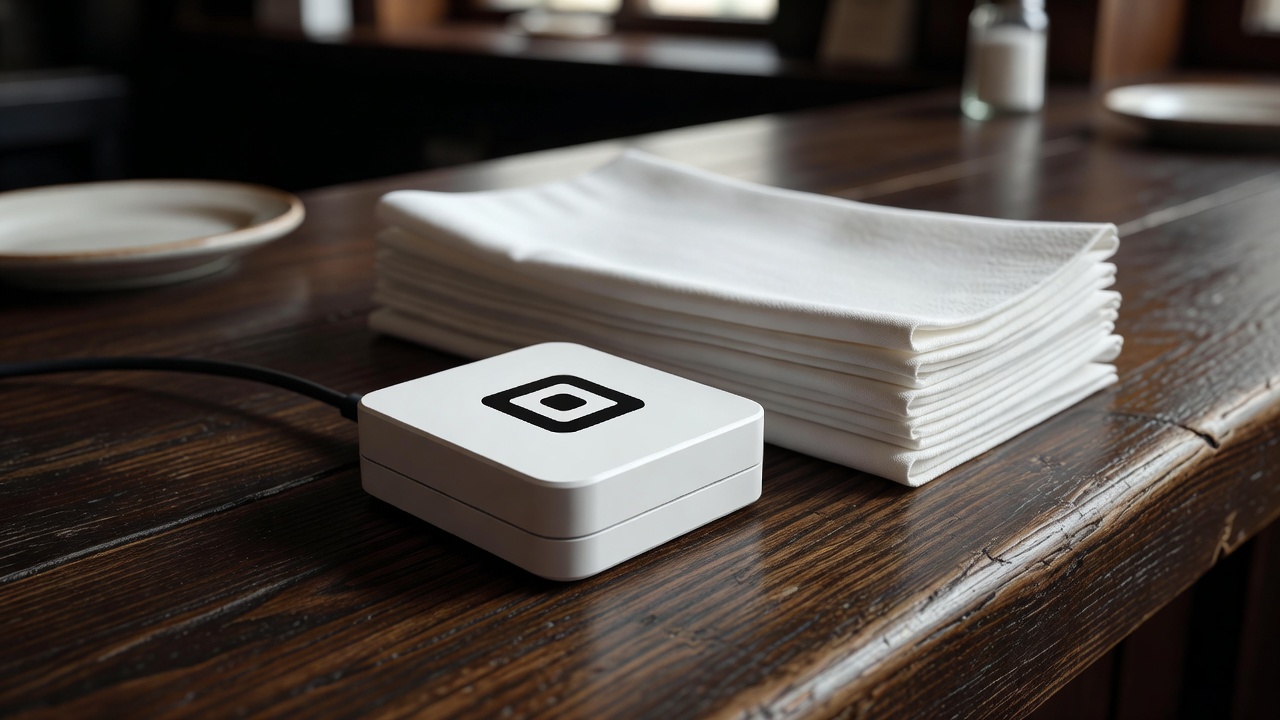
Square's AI Ordering Play Isn't Just Clever — It's a Lifeline for Restaurants Drowning in Platform Fees
Let's not dress this up: the restaurant tech stack has been a hostage situation for years. You build a business on thin margins, then watch DoorDash, Uber Eats, and Grubhub carve off 20 to 30 percent of every digital order because they own the discovery layer. Square's new ChatGPT app and Claude plugin won't fix the industry's structural rot overnight, but it's the first credible attempt to decouple discovery from extraction. That alone makes it the most important restaurant tech launch of 2026.
The mechanics are deceptively simple. A consumer asks ChatGPT or Claude for "Thai food near me that delivers," the AI surfaces a Square-powered menu with live pricing and modifier logic, and the order flows straight into the restaurant's existing Square POS — no middleware, no tablet jungle, no 30-percent vig. Square takes its standard card-not-present rate (2.9% + $0.30, or 3.3% + $0.30 on entry plans) and calls it a day. No marketplace commission. No "visibility" upsell. No penalty for refusing to run a perpetual discount.
The Math That Makes This Matter
Independent restaurants operate on 3 to 9 percent net margins when the wind blows right. A $40 order on DoorDash Premier means $12 vanishes before the fryer even heats up. Add the platform's separate payment processing fee and you're cooking at a loss. Square's model doesn't just shave points — it restructures the relationship. The AI becomes a discovery engine, not a toll collector. The restaurant keeps the customer data, the margin, and the brand relationship.
This is the unspoken betrayal of the aggregator era: they didn't just charge for delivery logistics. They charged for access. Want to appear in "Top Rated"? Upgrade to Plus. Want your own delivery drivers but still show up in search? Pay the pickup penalty. Square's integration, by contrast, pulls straight from the live catalog — modifiers, stock, pricing — so the AI agent never hallucinates an out-of-stock item. The merchant audits their own footprint by invoking the plugin with an @ symbol in ChatGPT or installing the Claude extension. That's it. No SDK. No dev sprint. No revenue share.
Why the AI Layer Changes the Power Dynamic
Critics will say this is just another ordering channel. They're missing the shift. When discovery moves into an LLM interface, the "app" — with its home-screen real estate, push notifications, and algorithmic-fee lever — loses its gatekeeper status. The consumer's intent is expressed in natural language; the fulfillment infrastructure disappears into the background. Square isn't building a marketplace. It's building plumbing that any AI agent can tap into.
That distinction matters because the next wave of AI agents — OpenAI's Operator, Anthropic's computer use, Google's Project Mariner — will act autonomously on users' behalf. They'll need structured, real-time inventory and checkout APIs, not SEO-optimized landing pages. Square just handed them a standardized, low-friction endpoint. If this scales, the aggregator's moat — "we own the consumer relationship" — evaporates. The consumer relationship becomes a conversation, not an app install.
The Catch? Distribution. Always Distribution.
Let's not pretend Square solved discovery. ChatGPT has 200 million weekly users; Claude has a fraction of that. Neither is a food-ordering habit yet. DoorDash and Uber Eats have spent a decade training consumers to open their apps when hunger strikes. Behavioral inertia is a hell of a moat. Square's plugin only works if the AI surfaces the restaurant in the first place — and right now, LLM local search is spotty, citation-heavy, and easily gamed.
There's also the checkout fork: some configurations complete payment inside the chat via Order by Cash App; others redirect to the merchant's Square Online page with a pre-filled basket. That inconsistency will confuse early adopters. And while Square waives marketplace fees, the 2.9–3.3% + $0.30 online rate is still higher than card-present — a reminder that "low fee" is relative.
But the Direction Is Unmistakable
For a decade, restaurant tech has been a game of who owns the order. Toast owns the POS. DoorDash owns the marketplace. Square has always sat in the middle — payments, payroll, loyalty, online ordering — but never with a discovery play this bold. By plugging directly into the AI layer, they're betting that the next consumer interface isn't an app store. It's a context window.
If they're right, the 30-percent commission model joins the fax machine and the printed menu in the archive of restaurant-industry absurdities. If they're wrong, Square still sells a lot of card readers. The asymmetry of that bet tells you everything about who's actually innovating — and who's just defending turf.
Restaurants don't need more tablets. They need margins that let them keep the lights on. Square just handed them a path that doesn't require paying rent to the aggregators. That's not a feature. That's leverage.