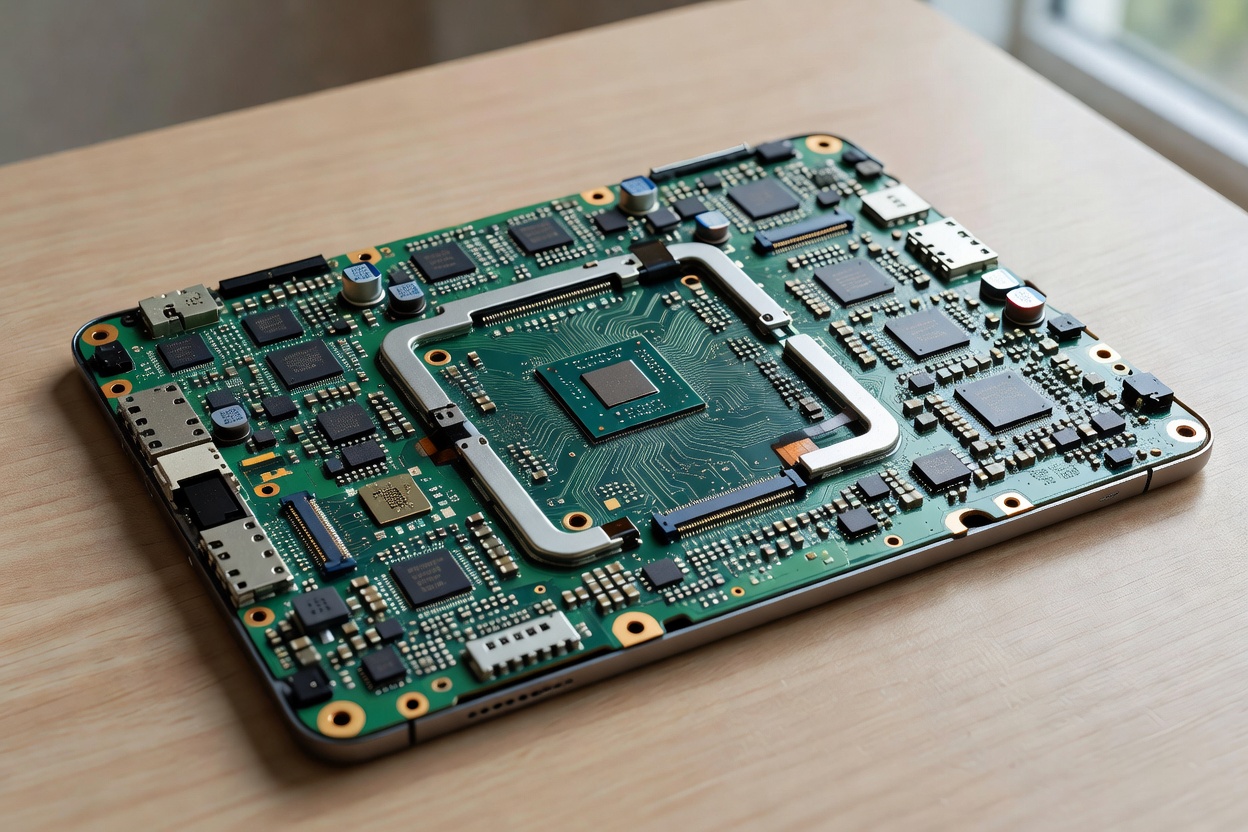
Amazon updated 2023’s Fire HD 10 tablet with 4GB of RAM
Digital Frontier EditorialJuly 20265 min read
Key Takeaways
The 32GB Fire HD 10 (2023) now ships with 4GB RAM — up from 3GB — at a $15 price increase
Amazon left the 64GB model stuck at 3GB RAM, creating a bizarre spec inversion
Lock screen ads are mandatory on the refreshed unit; removing them costs extra
The quiet update likely reflects memory chip shortages driven by AI data center demand
Amazon slipped a spec bump into a year-old budget tablet and hoped nobody would notice. They noticed.
The 2023 Fire HD 10 just got 4GB of RAM — but only on the 32GB storage tier. The 64GB model stays at 3GB. That asymmetry isn't a typo. It's a tell.
Budget tablets live and die by memory. Fire OS isn't light. Amazon's skin, the ever-present ads, the background services pushing Prime Video and Kindle sync — they all fight for the same pool. Three gigabytes was already tight. Four brings breathing room. But only if you buy the smaller storage option.
The price climbed from $139.99 to $154.99. Fifteen dollars for one extra gigabyte of RAM. That's not a value play. That's a bill of materials adjustment passed straight to the buyer.
The 64GB anomaly
Here's where it gets strange. The higher-capacity model — the one buyers choose when they plan to actually store media — keeps the old 3GB configuration. Amazon didn't refresh it. They didn't price it higher. They just left it alone.
Two explanations. Neither flattering.
First: supply constraints. The RAM crisis is real. Data center buildout for AI workloads has vacuumed up DDR4 and LPDDR4X supply. Chip makers prioritize server modules. Consumer device allocations get squeezed. Amazon may have secured a limited run of 4GB packages — enough for one SKU, not two. So they applied it where the margin math worked.
Second: segmentation. Amazon's tablet lineup is a funnel toward services. The 32GB model exists to hit a price point. The 64GB model exists to upsell. If the 32GB version performs noticeably better, some buyers might downgrade storage and stream instead. That serves Amazon's recurring revenue.
Either way, the customer loses clarity. Spec sheets shouldn't require a flowchart.
Ads as a feature, not a bug
The refreshed 32GB model only ships "with lock screen ads." Amazon's phrasing. The ad-free version — previously a $15 upcharge — isn't offered at launch. You buy the ads, then pay $15 later to remove them.
That's a $30 total premium over the original 3GB/32GB/ad-free configuration. For one gigabyte of RAM.
The original 3GB/32GB model remains listed at $139.99 while stock lasts. Amazon isn't discontinuing it. They're running two nearly identical SKUs at different price points with different RAM and different ad policies. Inventory management as product strategy.
The Steam Deck parallel
Valve faced the same supply wall. The Steam Deck (OLED) originally offered a 16GB configuration as two 8GB modules. That option vanished. Valve switched to a single 16GB stick — cheaper to source, harder to repair, functionally identical for the user.
Amazon's move rhymes. Different device class, same root cause. Memory fabricators have retooled for HBM and high-density server DIMMs. Low-density mobile packages are legacy lines. Wafer starts are declining. Prices are rising.
AFTVnews spotted the pattern first. They've tracked Fire tablet hardware revisions for years. Their read: Amazon can't source the original 3GB packages reliably anymore. The 4GB swap isn't an upgrade. It's a substitution.
What didn't change
Everything else. Same 10.1-inch 1920x1200 panel. Same MediaTek MT8186A eight-core processor at 2GHz. Same 13-hour battery claim. Same microSD slot. Same Fire OS 8 built on Android 11 — already two major versions behind.
The processor was never the bottleneck. MediaTek's mid-range silicon handles video playback and web browsing fine. It chokes on multitasking. That's a RAM problem. The fix is partial and lopsided.
The budget tablet trap
Fire tablets are loss leaders. Amazon sells hardware at or below cost to lock users into the ecosystem. Prime. Kindle. Audible. Appstore. Ads. The device is a portal.
That model only works if the portal doesn't frustrate. A tablet that reloads browser tabs because memory pressure killed the background process breaks the illusion. It reminds the user they bought cheap hardware.
Four gigabytes should have been the baseline in 2023. It was the baseline on the Fire HD 8 (2022) and Fire HD 8 (2024). The HD 10 lagged because Amazon could get away with it. The larger screen implies media consumption — streaming, not multitasking. Until it doesn't.
Who should buy
If you need a cheap tablet for a kid, a kitchen recipe display, or bedside video — the original 3GB/32GB at $139.99 is the rational choice. Stock permitting. The extra RAM won't change the experience for single-app use.
If you sideload Android apps, split-screen, or keep Chrome tabs open alongside Spotify — the 4GB model matters. But you're also the buyer who should spend $50 more on a Samsung Galaxy Tab A9+ or a used iPad. Better SoC. Longer OS support. No ad tax.
The 64GB Fire HD 10 at 3GB RAM makes sense for no one. Not at current pricing. Not with that spec sheet.
Silence as strategy
Amazon didn't announce this. No press release. No blog post. A spec sheet update on a product page. The company that broadcasts every Prime Day deal with a satellite uplink went quiet on a hardware change.
That silence confirms the supply-chain theory. Companies don't hide upgrades. They hide substitutions.
The Fire HD 10 (2023) was already a compromise device. Now it's a compromise device with a forked spec sheet, a mandatory ad tier, and a price hike justified by a component shortage Amazon won't acknowledge.
Buy the old stock while it lasts. Or don't buy at all. The next Fire HD 10 — whenever it arrives — will likely standardize 4GB across the board. Amazon will call it an innovation. It'll be a correction.