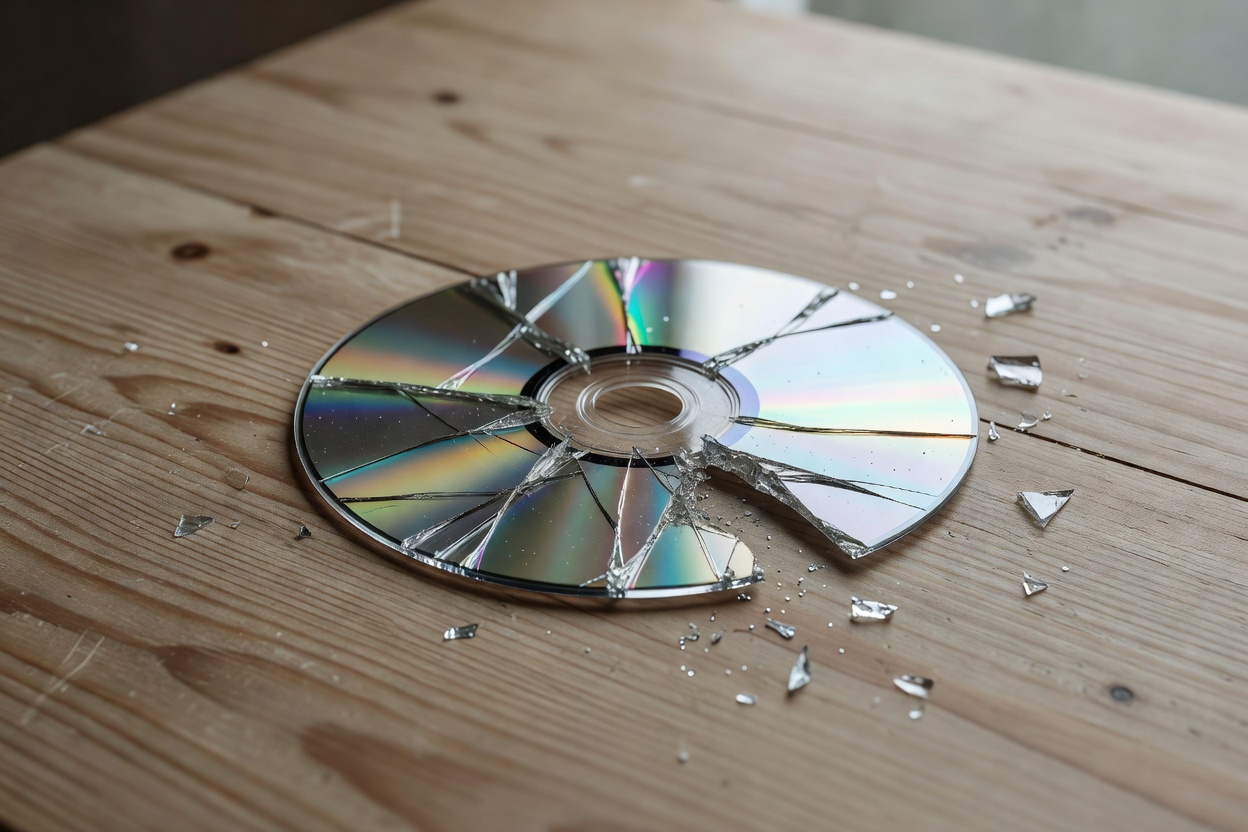
Sony kills game ownership and says it's all your fault
Six weeks. That's how long it took for the industry to circle back around and make a liar out of me. When I revisited Tom Bramwell's 2013 editorial — "Microsoft kills game ownership and expects us to smile" — I meant it as a benchmark. A reminder of what the fight looked like before we all collectively decided to stop fighting. I didn't mean it as a template for my own byline, and I certainly didn't mean to be reaching for it twice in a single week.
First Rockstar, nudging the first domino in the long-telegraphed collapse of physical media. Now Sony, swinging the sledgehammer. From 2028, no new PlayStation games will be printed on discs. From any source. Let that sink in: a platform holder with 30 years of optical media history, billions of discs pressed, an entire retail ecosystem built around the plastic rectangle — just walks away. The PS6 will almost certainly ship without a drive. It'll cost a grand, because why wouldn't it? Without physical games to anchor pricing discipline, the digital storefront becomes a monopoly. Monopolies don't discount. They extract.
And with that, the concept of ownership — real ownership, the kind where you buy a thing and it's yours to keep, share, sell, preserve, bequeath — is effectively dead on the highest-profile console platform on Earth.
We've been sleeping through the funeral for years
Don't pretend this is a surprise. The corpse has been cooling since 2003, when Valve launched Steam and taught a generation of PC gamers that "buying" meant "renting indefinitely from a server you don't control." We cheered. We called it convenience. We built libraries of hundreds of games we don't own, can't resell, can't lend, and will lose the moment Valve decides to pivot, fold, or simply turn off the lights. Steam didn't start the fire, but it handed out the matches and told us they were sparklers.
PlayStation discs haven't been ownership tokens for a long time either. The disc-as-license model — where the plastic is just an authentication dongle for a day-one patch the size of the game itself — has been the standard since the PS4 era. Preservation experts have been screaming about this for years: a disc that requires a server handshake to function isn't preservation. It's a timeout bomb.
Nintendo? The Switch 2's "game-key cards" are a Schrödinger's cartridge. You can resell them, yes — for now. But whether Nintendo can revoke the license tied to that card remains an unresolved legal gray zone they've carefully avoided clarifying. They'll clarify it the moment it suits them.
Xbox? Microsoft has spent the last decade fumbling the bag so comprehensively that they've effectively ceded the high-end console market to Sony by default. Game Pass is a remarkable value proposition — and a brilliant mechanism for normalizing the idea that you own nothing, you just subscribe. Phil Spencer's cross-play push was genuinely pro-consumer once. Now it looks like the last gasp of a division that stopped mattering.
Competition didn't just fail. It surrendered.
Here's the uncomfortable truth: Sony feels comfortable killing discs because nobody is left to stop them.
Xbox's impotence isn't just a sad story for Green Team fans. It's the reason Sony can announce the end of physical media with a shrug instead of a strategy. When your only viable competitor has spent ten years pivoting to "platform agnostic services" and acquiring publishers instead of selling consoles, you don't have to compete on consumer rights. You just have to exist.
The PS5 Pro launches at $700 without a drive. The PS6 will launch at $1,000 without one. You'll pay the premium. You'll subscribe to PS Plus Premium to access "your" library. You'll accept that Studio Canal can vanish 551 films from "your" digital library overnight because licensing expired and Sony's terms of service say tough luck. You'll call it progress.
The lie we tell ourselves
"But digital is convenient."
Convenience is the anesthetic they give you before the amputation. It's convenient until the server goes dark. Until the account gets banned. Until the license expires. Until the format changes and your library doesn't migrate. Until the price hikes hit and you have no alternative storefront, no used market, no leverage.
Physical media was never perfect. Discs rot. Drives fail. But a disc in your hand is a contract the seller can't unilaterally rewrite. A digital license is a permission slip they can revoke at 3 AM on a Tuesday without notice.
Sony knows this. They're betting you don't care enough to stop them. History says they're right.
Preservation is now piracy
The bitter irony: the only people who will be able to play God of War: Ragnarök in 2040 are the ones who crack the encryption and host the ISOs. The archivists, the hackers, the "pirates" — they're the stewards now. The paying customers get a dead switch.
Sony didn't kill game ownership alone. We handed them the knife. We traded permanence for convenience, ownership for access, leverage for a frictionless checkout. Now the bill comes due.
Six weeks ago, I re-read Bramwell's piece to remember what the fight was about. Now I'm writing his obituary. The worst part? We'll all buy the PS6 anyway.