The Fog Finally Lifts on Konami's Best Idea in Decades
Konami has spent the better part of fifteen years treating Silent Hill like a cursed artifact — something to be locked away, occasionally dusted off for a pachinko machine or a metal gear solid crossover that nobody asked for. The publisher's stewardship of its own crown jewel has been a masterclass in institutional cowardice. So it feels almost disorienting to write this: Konami is currently making the smartest decisions it has made since the PlayStation 2 era.
The strategy is almost laughably simple. Hand the keys to talented external studios. Get out of the way. Repeat.
Three Studios, Three Visions, Zero Committee Design
Look at the lineup. Bloober Team delivered a faithful, fantastic remake of Silent Hill 2 that understood the original's psychological architecture better than most fans gave them credit for. NeoBards and Ryukishi07 crafted Silent Hill f, an original entry steeped in Japanese horror traditions that somehow felt more "Silent Hill" than half the western-developed sequels. And now Screen Burn — formerly No Code, the studio behind the claustrophobic sci-fi gem Observation — is taking a swing with Townfall.
This isn't a revival. It's a resuscitation via distributed authorship. And it's working because each studio is being allowed to answer a different question: what does Silent Hill look like through our lens?
Screen Burn's answer, based on the hands-off walkthrough I witnessed, is a first-person stealth thriller built around a diegetic radio device called the CRTV. It's Alien: Isolation meets Scottish coastal dread. Director Jon McKellan worked on Isolation, and the DNA is unmistakable — the emphasis on avoidance over confrontation, the tactile physicality of the tools, the sense that violence is a failure state, not a power fantasy.
The CRTV Is the Best Horror UI in Years
Let's talk about that radio. The CRTV — a handheld screen that visualizes incoming signals — forces you to physically aim it at walls, corners, and corridors to "see" enemy patrol patterns through ultrasound-like feedback. It doesn't highlight the world for you. It demands you interpret it. You watch a blip move behind a building, memorize the rhythm, then sprint during the gap.
This is horror as cognitive load. Not jump scares. Not resource starvation. The terror comes from the split-second where you're staring at a tiny green screen, knowing something monstrous is six feet away on the other side of brick, and you have to trust your read of a waveform.
It's also the most elegant solution to the "detective vision" problem I've seen in modern horror. No magical pulses. No glowing footprints. Just a piece of in-universe equipment with limitations you can feel in your wrist.
Scotland Is a Horror Setting Waiting to Happen
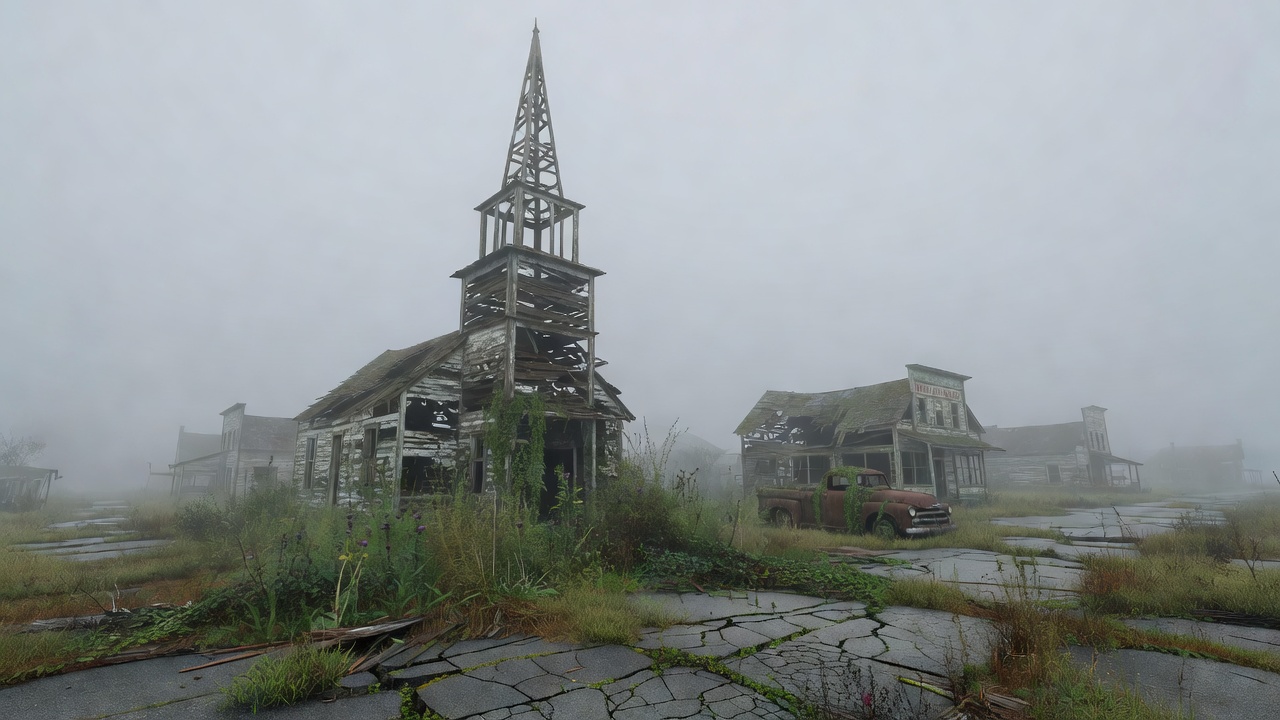
St. Amelia, the fictional port town standing in for the real St. Monans, is a stroke of brilliance. Scotland's east coast — all harried gulls, salt-corroded stone, and fog that doesn't so much roll in as occupy — has never been properly mined for horror. The density of that fog in the demo wasn't a graphical filter; it was a gameplay mechanic. You see ten feet. Maybe fifteen. The CRTV becomes your only reliable sense.
Screen Burn is writing what they know. That authenticity matters. Silent Hill has always been about place — the town as a mirror of the protagonist's rot. Moving the setting to a Scottish fishing community with its own buried sins and Presbyterian guilt? That's not just a reskin. That's understanding the assignment.
Combat as Desperation, Not Empowerment
Simon Ordell carries a wooden plank wrapped in barbed wire. That's it. That's the arsenal. Engaging the town's "grotesquely transformed humans" — and let's be clear, these are not monsters in the traditional bestiary sense; they're people the town has unmade — is a last resort that will likely get you killed.
Good. Silent Hill combat has been broken since Origins tried to make it an action game. The series works when violence feels wrong, clumsy, and traumatic. When every swing of that nail-studded plank reminds you that you're hurting something that used to be a neighbor. Screen Burn understands this. The stealth isn't a gameplay mode; it's a moral stance.
The Pattern Is the Point
Three games. Three developers. Zero overlap in creative leadership. And yet each one feels unmistakably Silent Hill — not because they check boxes (fog, radio, nurses, Pyramid Head), but because they understand the core tenet: the town reflects the visitor. Guilt made manifest. Punishment tailored to the sinner.
Konami didn't crack this code. They just stopped standing in the way.
There will be misses. The Short Message existed. The film adaptations remain an embarrassment. But for the first time since Team Silent disbanded, the franchise has momentum that isn't fueled by nostalgia alone. It's fueled by trust — the radical notion that the people who made Observation might know how to build tension better than a committee in Tokyo.
What Comes Next
Townfall doesn't have a release date. The demo was hands-off. The usual caveats apply. But I walked away from that walkthrough with a feeling I haven't had since 2001: curiosity about what's around the next corner. Not dread of a cheap jumpscare. Not exhaustion from another crate-pushing puzzle. Genuine, unsettling curiosity.
If that's what Screen Burn delivers — a Silent Hill where the horror is in the listening, the waiting, the interpreting — then Konami's hands-off experiment will have produced its most vital fruit yet.
The fog is still there. But for the first time in decades, I can see shapes moving inside it. And they look like they know exactly where they're going.