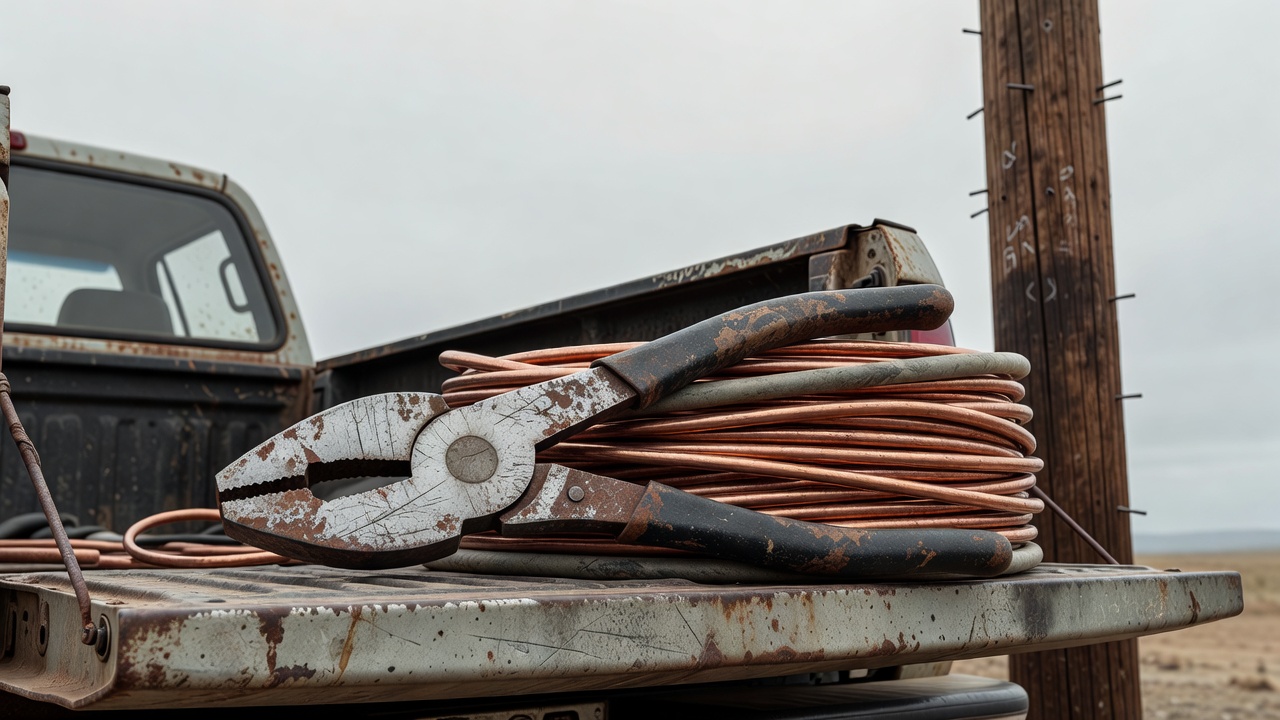
The Midwest electrician who stops telling dates what he does for a living has stumbled onto a truth the labor movement has spent a century avoiding: building the future doesn't mean you own it.
His problem isn't the work. It's the stigma. When he says "data center," the conversation dies. The women he meets don't see a skilled tradesperson wiring the backbone of modern civilization. They see a collaborator. A sellout. Someone feeding the machine that's eating their privacy, their attention, their jobs, their planet.
He took a pay cut for the privilege.
The Union's Awkward Embrace
The International Brotherhood of Electrical Workers wants you to know its members are "powering the AI Revolution." Their March "Data Center Principles" declare union labor "essential to the future of AI." It reads like a press release written by the very companies writing the checks — Meta's trade academy, Google's $50 million training fund, the whole corporate charm offensive.
This is the AFL-CIO playbook circa 1950: hitch your wagon to the industrial juggernaut, secure the jurisdictional claim, negotiate the wage package, call it solidarity. It worked for the auto workers. It worked for the steelworkers. Until the factories closed.
IBEW isn't wrong that someone has to pull the cable. The question is whether "essential to the future of AI" is a bargaining position or a hostage video.
The Complicity Calculus
On r/electricians — half a million monthly visitors, the digital union hall — the debates are raw. Will AI automate the estimators? The designers? The project managers? One thread asks whether wiring a GPU cluster makes you complicit in the surveillance state, the copyright theft, the energy drain, the algorithmic cruelty.
Ryan, who won't give his last name, puts it bluntly: "I think world governments, not just our own, are becoming more right-wing and more fascistic." He doesn't trust Musk. He doesn't trust Karp. He sees four or five AI companies exchanging money with each other and calls it a grift.
He's not wrong. He's also not building the data centers.
The Midwest electrician made the other calculation. "If you can't beat them, join them." Promoted to management in months. Eyeing an engineering role. He's betting the house on the casino.
Infrastructure Doesn't Ask Permission
Here's the historical irony the union leadership misses: the trades have always built things they didn't control. The railroads that enabled the Gilded Age. The highways that enabled white flight. The nuclear plants that enabled the weapons program. The fiber optic cables that enabled the surveillance economy.
Electricians wired the Panopticon. They didn't design it.
The difference now is speed and scale. The data center buildout isn't infrastructure in the public sense — it's private enclosure at planetary scale. Microsoft, Google, Amazon, Meta, Oracle: they're not building for the grid. They're building around it. Their own substations. Their own water rights. Their own microgrids. Their own company towns in all but name.
And they need union hands to do it.
The Sellout Label
"Sellout" is a class slur dressed up as moral judgment. It implies agency the electrician never had. He didn't choose the AI arms race. He didn't choose the tax abatements, the water deals, the eminent domain threats, the noise ordinances waived for hyperscalers. He chose the apprenticeship. He chose the tool bag. He chose the one path that offered a pension in an economy that canceled them.
But the stigma sticks because it touches a nerve: you are building the thing that replaces you.
Not the electrician — not yet. The robot doesn't pull 4/0 through conduit in a 120-degree mezzanine. But the project manager? The estimator? The engineer he wants to become? The white-collar layer above the trades is the first tranche of AI replacement. He's wiring his own ceiling.
No Clean Hands
Ryan's refusal is a luxury belief. He works somewhere — residential, commercial, industrial — and that somewhere has a carbon footprint, a supply chain, a political economy. We all cash checks from the machine. The question is whether you pretend your hands are clean.
The Midwest electrician doesn't pretend. He worries about "corporate greed" and scams. He knows the deal. He just decided the upward mobility was worth the moral tax.
That's not selling out. That's survival in a system that monetizes your survival instinct.
The Real Conversation
The dating conversation that "shifts or gets shut down" — that's the canary. Not because the dates are right, but because they're asking the question the labor movement won't: who is this for?
IBEW's "Data Center Principles" mention "community benefits" and "workforce development." They don't mention data sovereignty. Algorithmic accountability. The right to opt out. The union negotiated wages. It didn't negotiate purpose.
Until it does, the electrician on the date will keep lying. Or omitting. Or watching the interest evaporate when he says the magic words: data center.
He's not a sellout. He's the only one being honest about the price.