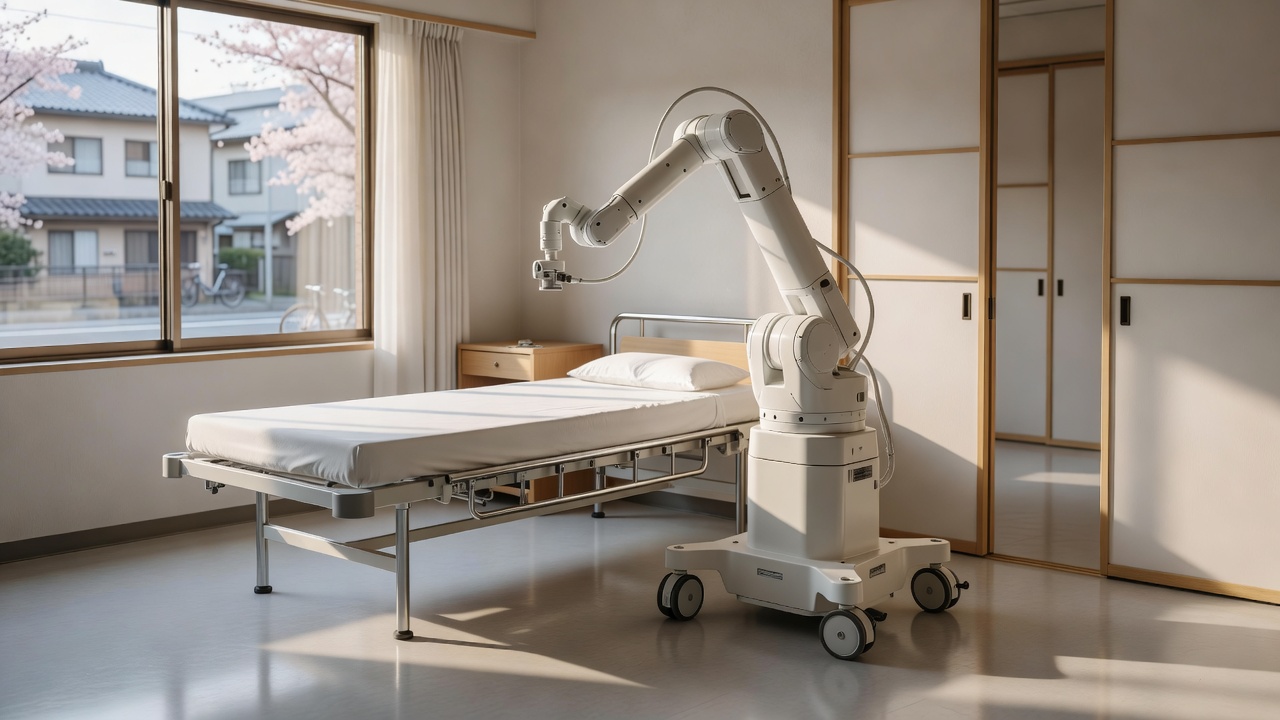
Japan wants 10 million more robots by 2040, some providing medical care
Ten million robots. That's not a typo. It's the target Japan's government has set for 2040 — a deadline that arrives sooner than the average mortgage gets paid off. The Ministry of Economy, Trade and Industry (METI) didn't pull this number from a manga plot. It's the cold arithmetic of a nation that loses 800,000 people a year to demographic gravity and has exactly zero appetite for immigration as a pressure valve.
Let's be clear about what this means. We're not talking about another generation of welding arms in Toyota plants. The strategy explicitly calls for robots in "medical and nursing care" — feeding, lifting, monitoring, even conversing with the elderly. By 2040, one in three Japanese citizens will be over 65. The caregiver shortage already exceeds 370,000. The math doesn't work without automation. But the politics of admitting that? That's where it gets ugly.
The care crisis nobody wants to name
Japan has been "robot-ready" for decades. Honda's ASIMO danced on stages in the early 2000s. Paro the therapeutic seal has nuzzled nursing home residents since 2004. Fujitsu's HOAP series, Cyberdyne's HAL exoskeletons, SoftBank's Pepper — the prototypes have paraded for twenty years. Yet walk into a typical Japanese care facility today and you'll find... mostly exhausted human beings doing heavy lifting for ¥1,200 an hour.
The gap between demo and deployment isn't technical. It's economic and regulatory. A care robot that lifts a 70kg patient from bed to wheelchair needs medical device certification, liability insurance, facility retrofitting, and staff training. The robot costs ¥15-20 million. The human alternative costs ¥2.5 million annually in wages — but the human doesn't exist. Facilities are closing. Families are quitting jobs to care for parents. The "silver democracy" votes for pensions, not automation.
METI's new roadmap tries to break this logjam with subsidies, standardized interfaces, and a push for "care robot commons" — shared tech platforms so every manufacturer isn't reinventing the safety controller. It's sensible industrial policy. It's also an admission that the market alone won't solve this.
The dignity trap
Here's the uncomfortable question nobody in Tokyo wants to debate publicly: what happens when the robot is better than the human?
Not "cheaper." Not "more available." Better. A lift that doesn't strain a caregiver's back. A monitor that catches a fall in 0.3 seconds instead of 20 minutes. An AI companion that remembers every medication, every preference, every grandchild's name — and never loses patience. We're not there yet. But the trajectory is clear, and Japan is the only country with the demographic gun to its head to actually follow it.
The resistance won't come from technophobes. It'll come from the very people the system claims to protect. Japanese families already struggle with "robot guilt" — the sense that buying a care bot is abandoning a parent. Care workers' unions (yes, they exist, and they're fierce) frame automation as dehumanization. The Ministry of Health, Labour and Welfare moves at the speed of bureaucracy. Meanwhile, the beds fill up.
Exporting the crisis
Here's the kicker: Japan isn't just building for itself. The 10-million figure includes export targets. South Korea, China, Germany, Italy — all are 10-15 years behind Japan's demographic curve. They're watching. They're taking notes. The first country to crack scalable, affordable, culturally acceptable care robotics doesn't just solve its own crisis. It owns the 21st century's largest growth market.
Japanese firms know this. Toyota's Woven Capital invests in eldercare robotics startups globally. Cyberdyne has HAL centers in Germany and Singapore. Preferred Networks builds the AI brains that could make these machines genuinely autonomous. But they're hamstrung by a domestic market that treats care as a family obligation, not a service industry.
The real robot strategy
If METI were serious — truly serious — the 10-million target would come with three uncomfortable policies:
First, mandatory robot-readiness in new care facility construction. No more retrofitting. Door widths, ceiling tracks, power infrastructure, network backbone — baked in from blueprint. Second, a national "robot literacy" certification for care workers, tied to wage increases. Make automation a skill, not a threat. Third, a regulatory sandbox that lets facilities deploy experimental systems with informed consent and liability shields — real ones, not paper ones.
Instead, we get another white paper. Another subsidy program. Another "moonshot" goal that lets politicians pose with humanoid prototypes while the frontline rots.
Ten million robots by 2040. That's 2,740 robots every single day for 16 years. Japan installed maybe 50,000 industrial robots last year — total. Care robots? A few thousand. The gap is absurd. But so is the alternative: a nation of 120 million people caring for 35 million seniors with a shrinking workforce and a cultural prohibition on saying "we can't do this alone."
The robots are coming. The only question is whether they arrive as partners — or as the only option left when the last human caregiver burns out.
Japan chose this future in 1990, when the fertility rate dropped below 1.5 and stayed there. The robots aren't the decision. They're the receipt.