Keurig solved the office coffee disaster — then created a waste crisis that dwarfs the problem it fixed
The company's DRM-locked 2.0 machines proved it values control over convenience
Specialty coffee culture has moved on; Keurig now chases a quality standard it helped make irrelevant
Recyclable pods are a marketing bandage on a structural wound
The machine that fixed the break room
Remember office coffee before 2004? A glass carafe sitting on a hot plate since 7 a.m., bitter as battery acid by noon. Someone — always the same someone — would top it off with cold water and fresh grounds, diluting the sludge into something that tasted like wet cardboard. You drank it because the alternative was walking three blocks in February.
Keurig didn't invent single-serve coffee. But it invented the version that worked. A sealed pod. A needle. Hot water forced through under pressure. Forty seconds later: a cup that tasted the same every time. No measuring. No cleanup. No passive-aggressive notes about who forgot to start a new pot. The break room became a cafe of one. That was the save. it was genuine. It was also the trap.
The waste math is obscene
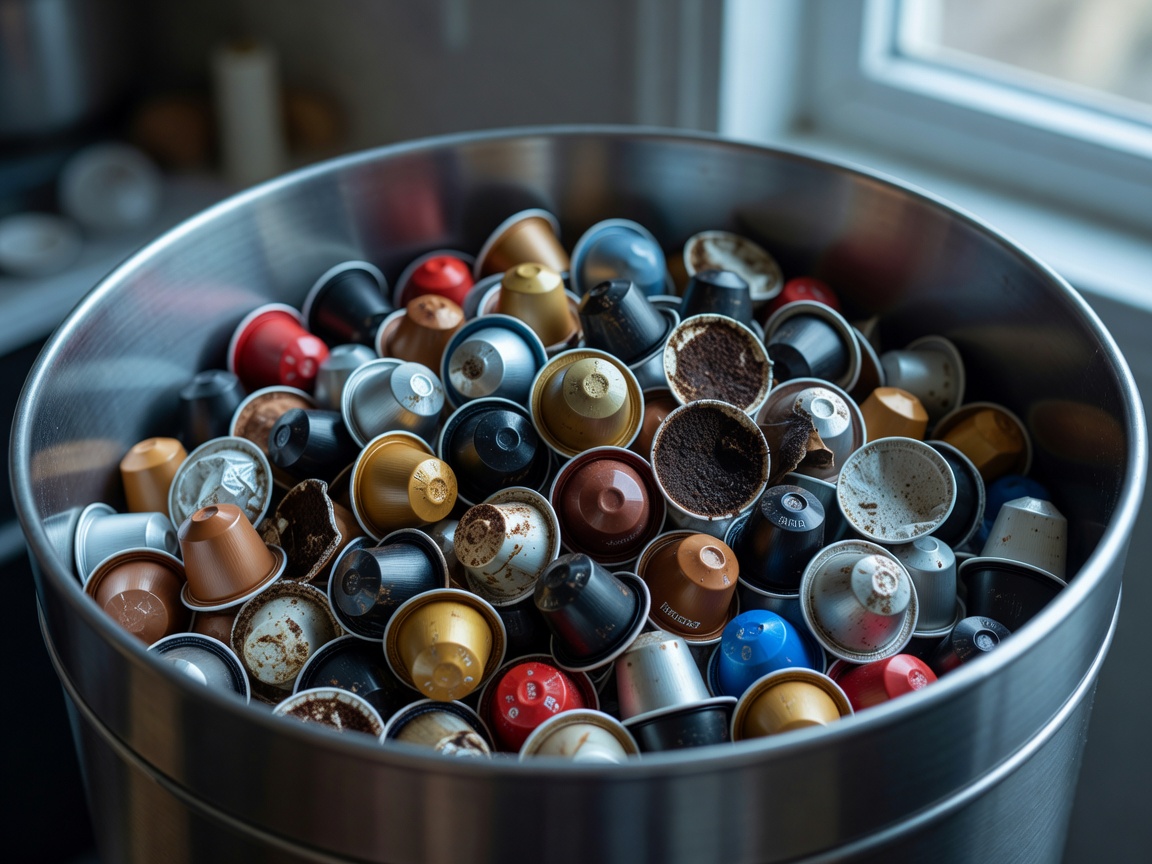
By 2014, Keurig sold 9.8 billion K-Cups. Laid end to end, they'd circle the equator more than ten times. Almost none were recyclable. The pod — plastic cup, aluminum lid, paper filter, coffee grounds — fused materials that no municipal facility could separate. Keurig knew this. They sold the convenience anyway.
The company pledged recyclable pods by 2020. They missed it. They pledged again for 2025. The current pods use polypropylene #5, technically recyclable in theory. In practice, most facilities screen out anything smaller than a credit card. The pods fall through the cracks — literally — into landfill. Keurig's own recycling program asks consumers to peel, empty, stack, and mail back. The compliance rate is a rounding error.
"Kill the K-Cup" wasn't a slogan. It was arithmetic.
DRM in your kitchen
2014 brought the 2.0 brewer. Its headline feature: a camera that read a special ink pattern on the pod rim. No pattern? No brew. Keurig had digitally locked its own customers out of competitor pods — including the Compostable ones that might have softened the environmental blow. The backlash was immediate. Rogers Family Coffee sued. Class actions followed. Keurig eventually walked it back, but the message landed: this company would rather own the ecosystem than serve the drinker.
That instinct hasn't faded. The new K-Brew and Chill adds a chilled-water circuit for iced coffee. Clever engineering. But it still only brews Keurig-licensed pods. The walls are higher now. They're just painted in friendlier colors.
Coffee culture left the building
While Keurig optimized for consistency, specialty coffee optimized for variability. Third-wave roasters treat beans like wine — origin, elevation, processing method, roast date all matter. Baristas weigh doses to the tenth of a gram. They adjust grind by humidity. They chase flavors Keurig's nitrogen-flushed, pre-ground pods physically cannot deliver: floral Ethiopian Yirgacheffe, chocolatey Guatemalan Huehuetenango, the bright acidity of a Kenyan SL-28.
Morgan Eckroth, a world-class barista, put it plainly: the best coffee in a K-Cup is still stale coffee. The pod format demands pre-grinding. Oxidation starts the moment the burrs stop turning. By the time you press the button, the volatile aromatics that make coffee transcendent are gone. What remains is caffeine and body. That's not nothing. It's just not coffee at its potential.
Keurig knows this. Their latest machines offer "strength" and "temperature" settings. They've partnered with Blue Bottle, Intelligentsia, Stumptown — the very roasters who built the culture that made Keurig feel antiquated. But a Blue Bottle pod is still a pod. The format constrains the result.
The/p>
Keurig's current pitch: sustainability through circularity. Recyclable pods. A mail-back program. Carbon-neutral commitments. These are real efforts. They're also insufficient. The fundamental problem isn't the plastic. It's the premise. A single-serve system that ships water-heavy pods across continents, brews them in energy-intensive machines, and generates a waste stream per cup will never be green. It can only be less brown.
The honest solution looks different. Grind-on-demand machines with reusable chambers. Compostable fiber pods that actually break down. Local roasters delivering fresh beans in returnable tins. Some companies are building these. Keurig isn't leading them.
What we actually lost
The tragedy isn't that Keurig exists. It's that Keurig won so completely it rewrote expectations. A generation now believes coffee should be instant, effortless, and identical every time. That belief erodes the rituals that make coffee meaningful: the grind, the bloom, the pour, the wait. The five minutes that connect you to a farmer in Colombia, a roaster in Portland, a morning that belongs to you.
Keurig gave us our time back. Then it sold us the idea that time was the only thing that mattered.
The machine sits on my counter. I use it when I'm late, when I'm sick, when the alternative is no coffee at all. It works. It always works. That's the save. The ruin is quieter: every pod is a small surrender to a system that prefers captive customers to curious ones. I recycle the pods. I know where most of them end up. I press the button anyway.